

When stress becomes chronic, the breath often changes without us realizing it—becoming shallow, held, or disconnected. Over time, this reinforces a nervous system that stays on edge, fatigued, or shut down.
Breathwork gently interrupts that pattern.
It gives you a way to work directly with your body, rather than trying to think your way into calm. Through intentional breathing patterns, you begin to influence your physiology—your heart rate, your brain activity, your emotional state—creating space for regulation, awareness, and deeper internal shifts.
What Is Breathwork?
Breathwork is the intentional use of breathing techniques to influence the body, brain, and nervous system. By changing the rhythm, depth, and pace of your breath, you can directly affect your physiological and emotional state.
The Science Behind Breathwork
Breathwork works by influencing the autonomic nervous system—the body's built-in system for regulating stress, recovery, heart rate, emotions, and overall physiological balance. Because breathing is one of the few bodily functions we can consciously control, it provides a direct pathway to shift our physical and emotional state. Research suggests that intentional breathing practices can help regulate the stress response, improve vagal tone and heart rate variability (HRV), reduce muscle tension, enhance emotional regulation, and strengthen the connection between the brain and body.
Breathwork @ Vaughan | Oct 29
What Makes Our Breathwork Gathering Different in Vaughan?
Our approach is grounded in trauma-informed, movement-based breathwork. The goal is not to chase high-intensity cathartic experiences. Instead, by synchronizing intentional breath with mindful movement and somatic practices, we create the conditions for the body to soften naturally and gently complete release.
When the body feels safe enough to let go and surrender, it often follows its own path toward release. Through intentional breath, mindful movement, and somatic awareness, participants can gently access deeper emotions and unmet needs beneath protective patterns while remaining within a regulated window of tolerance. Our breathwork sessions draw inspiration from:
Wim Hof breathing techniques
Pranayama practices
Sensorimotor psychotherapy somatic practices
Biodynamic Breathwork principles
Mindfulness, therapeutic sound, and music therapy
Attachment-informed yin movement
Qigong and energy-based movement practices

Who Is This Somatic Breathwork For?
This trauma-informed breathwork experience in Vaughan may be a good fit if you:
Experience chronic stress, burnout, or persistent anxiety and struggle to fully relax.
Carry chronic tension in your jaw, neck, shoulders, chest, hips, or psoas region.
Feel stuck in fight, flight, freeze, or chronic survival mode.
Feel disconnected from your body, emotions, or sense of self.
Want to improve nervous system regulation, vagal tone, and emotional resilience.
Are looking for a somatic, movement-based approach to complement psychotherapy or other wellness practices.
Are curious about breathwork and experiential mind-body healing.
Want practical tools to regulate their nervous system in daily life.

Reserve Your Spot in Our Upcoming Breathwork Session in Vaughan.
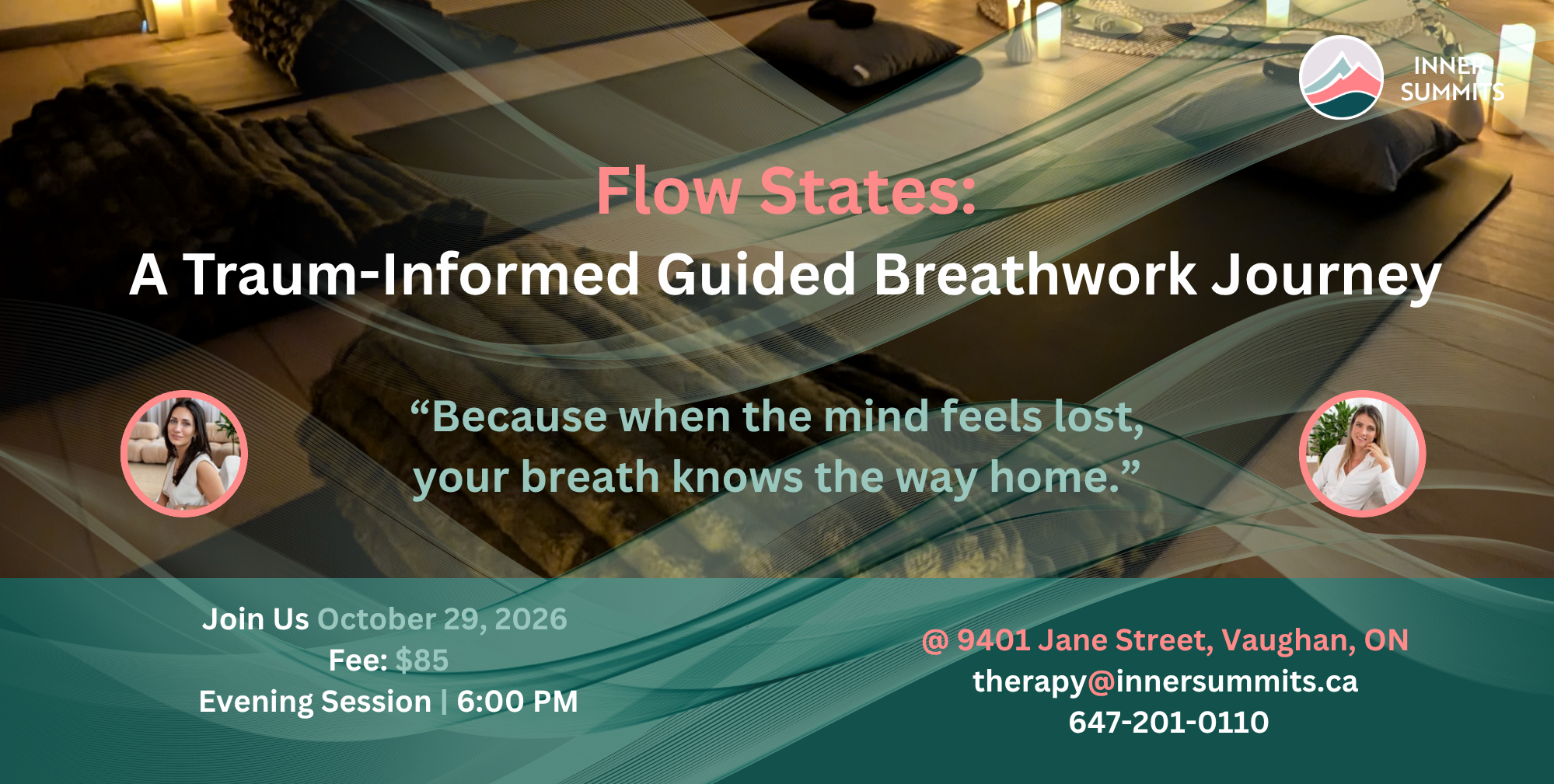
Date: Thursday, October 29, 2026 (3 Spots Remaining)
Evening: 6:00 PM (doors close at 6:15 PM)
Location: 9401 Jane Street, Suite 306, Vaughan, ON
Sign up: email us at therapy@innersummits.ca
Frequently Asked Questions?
-
No prior experience is necessary. Our trauma-informed breathwork sessions in Vaughan are designed for both beginners and experienced practitioners. We'll guide you through every stage of the experience, and you're encouraged to move at a pace that feels supportive for your body and nervous system. There is no "right" way to breathe or experience the journey.
-
We've thoughtfully prepared a comfortable personal journey station for every participant, including a yoga mat, blanket, bolster, eye pillow, and journal.
We recommend bringing any personal item that supports your sense of grounding and ease.
-
Wear loose, comfortable clothing that allows you to breathe deeply and move freely. Dressing in layers is recommended, as body temperature may fluctuate throughout the breathwork experience. Participants remove their shoes before the session to create a comfortable, grounded environment.
-
Relaxation is often a welcome outcome, but it's only one part of the experience.
Our somatic breathwork gatherings are designed to support nervous system regulation, body awareness, emotional processing, and resilience. While many participants leave feeling calmer, they also report feeling more connected to themselves, mentally clearer, and better equipped to respond to everyday stress.
-
Yes. Our Somatic Breathwork sessions are offered as Mindfulness Group Psychotherapy and are facilitated by a Registered Psychotherapist (RP) and/or a Registered Social Worker (RSW). As a result, they are often eligible for reimbursement under extended health insurance plans that cover group psychotherapy provided by these regulated professionals.
-
Emotional responses are a natural part of many healing experiences.
Intentional breathing can gently bring awareness to emotions, memories, or sensations that have been stored within the body. Our facilitators create a safe, compassionate, trauma-informed environment where every experience is welcomed without judgment. You remain in control throughout the session and are always free to slow down, pause, or modify your breathing.
-
Our guided breathwork journeys draw inspiration from several evidence-informed approaches, including:
Conscious Connected Breathing
Pranayama
Biodynamic Breathwork principles
Wim Hof-inspired breathing techniques
Somatic breath awareness
Mindfulness-based breathing practices
Each session is carefully adapted through a trauma-informed lens, prioritizing nervous system safety, regulation, and sustainable integration over intensity.
-
Breathwork is one of the most effective ways to directly influence the autonomic nervous system.
Research suggests intentional breathing practices may help:
Activate the parasympathetic ("rest and restore") nervous system
Improve heart rate variability (HRV)
Reduce stress hormones
Improve emotional regulation
Increase mindfulness and present-moment awareness
By working with the breath, we create the conditions for the body and brain to shift out of chronic stress and into greater balance.
-
Many people notice improvements in stress management, anxiety, emotional regulation, and sleep quality after developing a regular breathwork practice.
While breathwork is not a substitute for psychotherapy or medical care, it can be an excellent complementary practice that supports nervous system regulation, resilience, and overall well-being.
-
Breathing influences nearly every major system in the body.
Intentional breathwork can support improved oxygen and carbon dioxide balance, vagal tone, circulation, heart rate variability, muscle relaxation, and nervous system flexibility. Over time, these physiological changes may contribute to improved stress resilience, emotional regulation, and a greater sense of overall well-being.
-
Like most wellness practices, consistency tends to produce the greatest benefits.
Some participants attend monthly as part of their self-care routine, while others incorporate breathwork more frequently during periods of heightened stress or while working through trauma in psychotherapy. Your ideal frequency will depend on your personal goals and needs.
-
Absolutely.
Breathwork complements many therapeutic approaches, including somatic psychotherapy, EMDR, Internal Family Systems (IFS), Sensorimotor Psychotherapy, neurofeedback, and psychedelic-assisted psychotherapy integration. It offers a body-based way to deepen awareness, strengthen nervous system regulation, and help integrate therapeutic insights into everyday life.
-
Breathwork is generally very safe when facilitated by trained professionals. However, certain breathing techniques may need to be modified or may not be appropriate for everyone.
Please speak with your healthcare provider before attending.